


The latest from the labs.
Snacks Labs is what we call the initiative behind everything on this page: our designers upskilling to ship real software, and the projects that come out of that push. It started because these tools made building feel new again, and the excitement has been driving experiments ever since. Some have already changed how we work day to day. Some are still play. The useful ones become products.
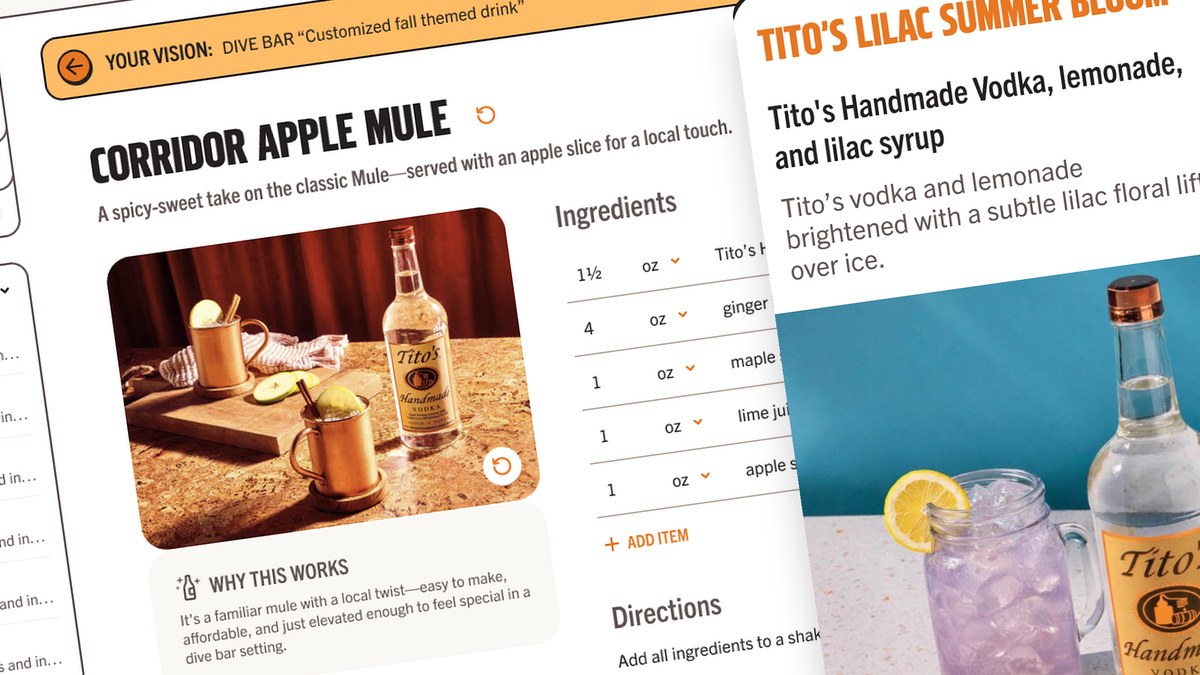
This page is a snapshot of where things stand: what we're doing with AI right now and how we're thinking about it. We'll show it through two Labs projects: Snacks Sites, the platform we're building as a product, and Snacks Trivia, an app one of our designers shipped end to end. And because the point of a lab is what leaves it, we'll end on the AI mixologist we designed for a beloved national spirits brand.
Figma is still where design lives. It's just no longer where it stops.
Figma is still home base for design: the brand, the design system, the global components, the templates that guardrail our client work. When granular control matters, that's where we go to get it.
But its role is narrowing on purpose. We paint fewer pixel-perfect pages in Figma, because more of the design now happens in the medium itself. Animation, interactivity, states, anything that wants to be one step closer to real, we design with AI in the working product, where you can feel it instead of imagining it.
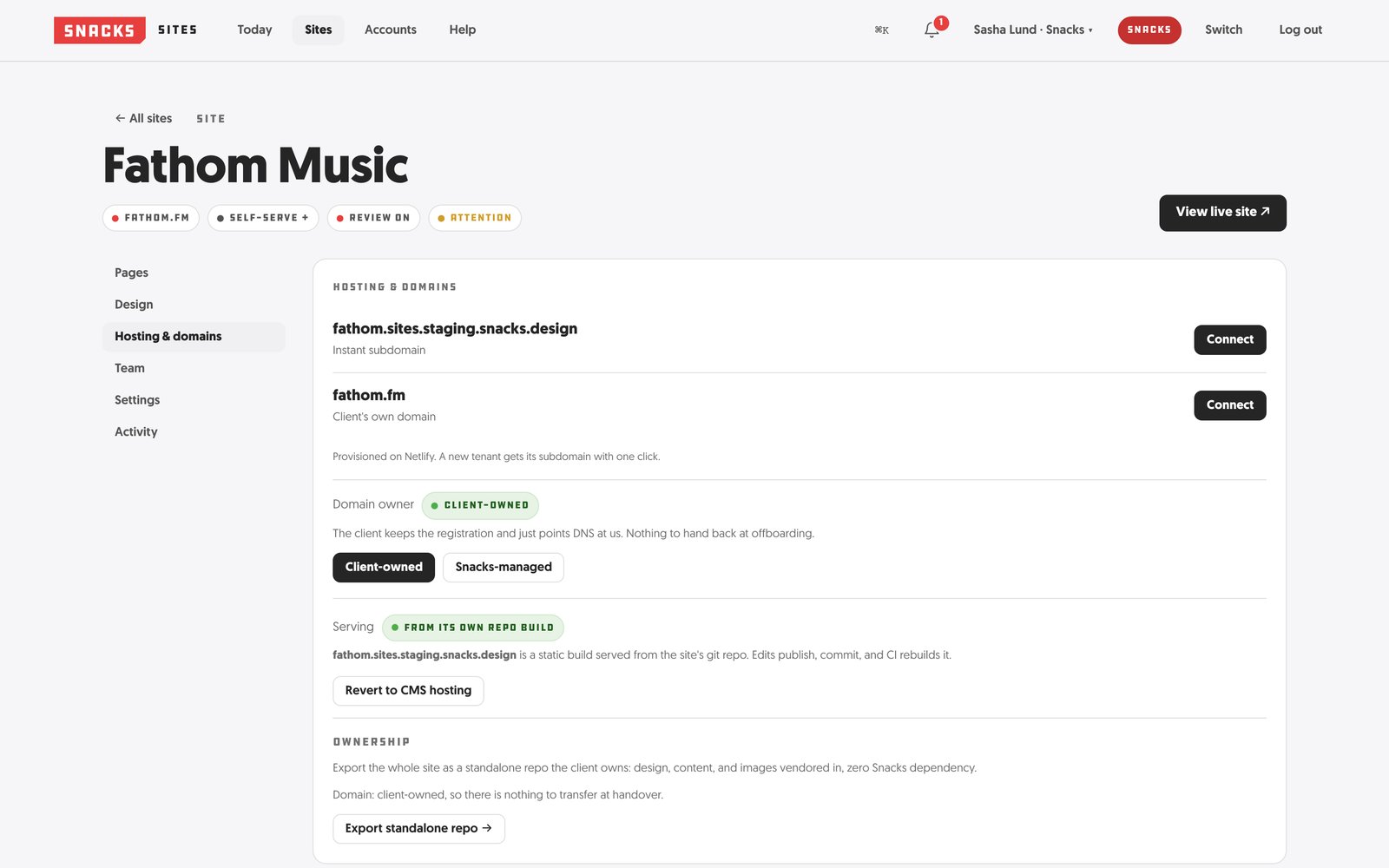
The delivery changed just as much. A design used to stop at the file and wait for an engineering team to pick it up. Now it becomes a GitHub repository, and our designers work on those repositories directly, using coding agents to build, change, and ship what they designed. The person with the design intent is the person shaping the build, with AI carrying the labor in between.
That makes GitHub the hub for engineering handoff. Work lands as pull requests with live previews attached. Anyone, including a partner's engineering team, can see exactly what changed, why, and what it looks like running. Handoff stops being a moment where a file gets thrown over a wall. It becomes a place where the work lives.
One more thing became true along the way: trying things is cheap now. When a workflow we need doesn't exist, we build it, for ourselves and for clients. Custom tooling used to be a luxury. Now it's just part of the work.
Our whole process shift, in one product.
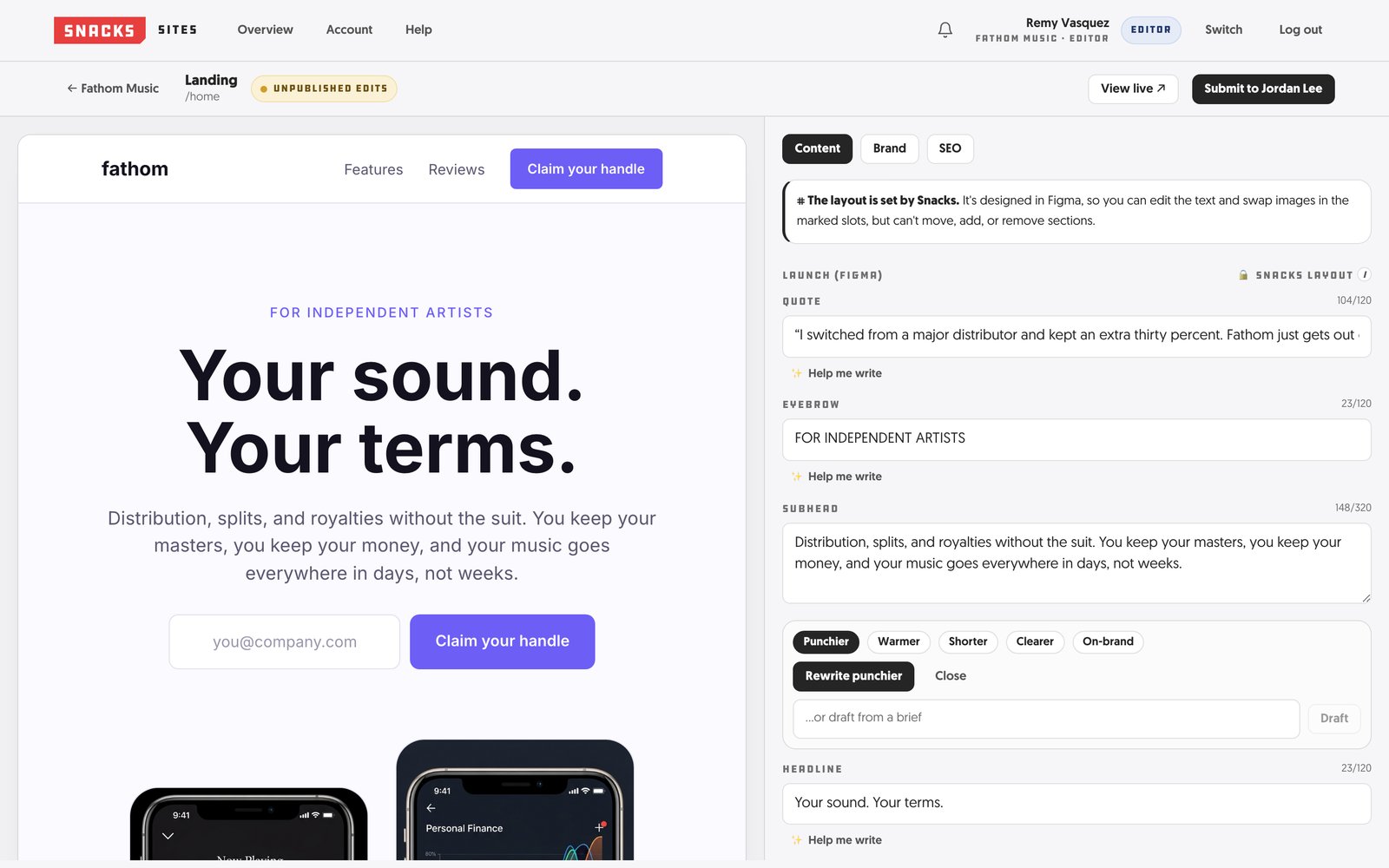
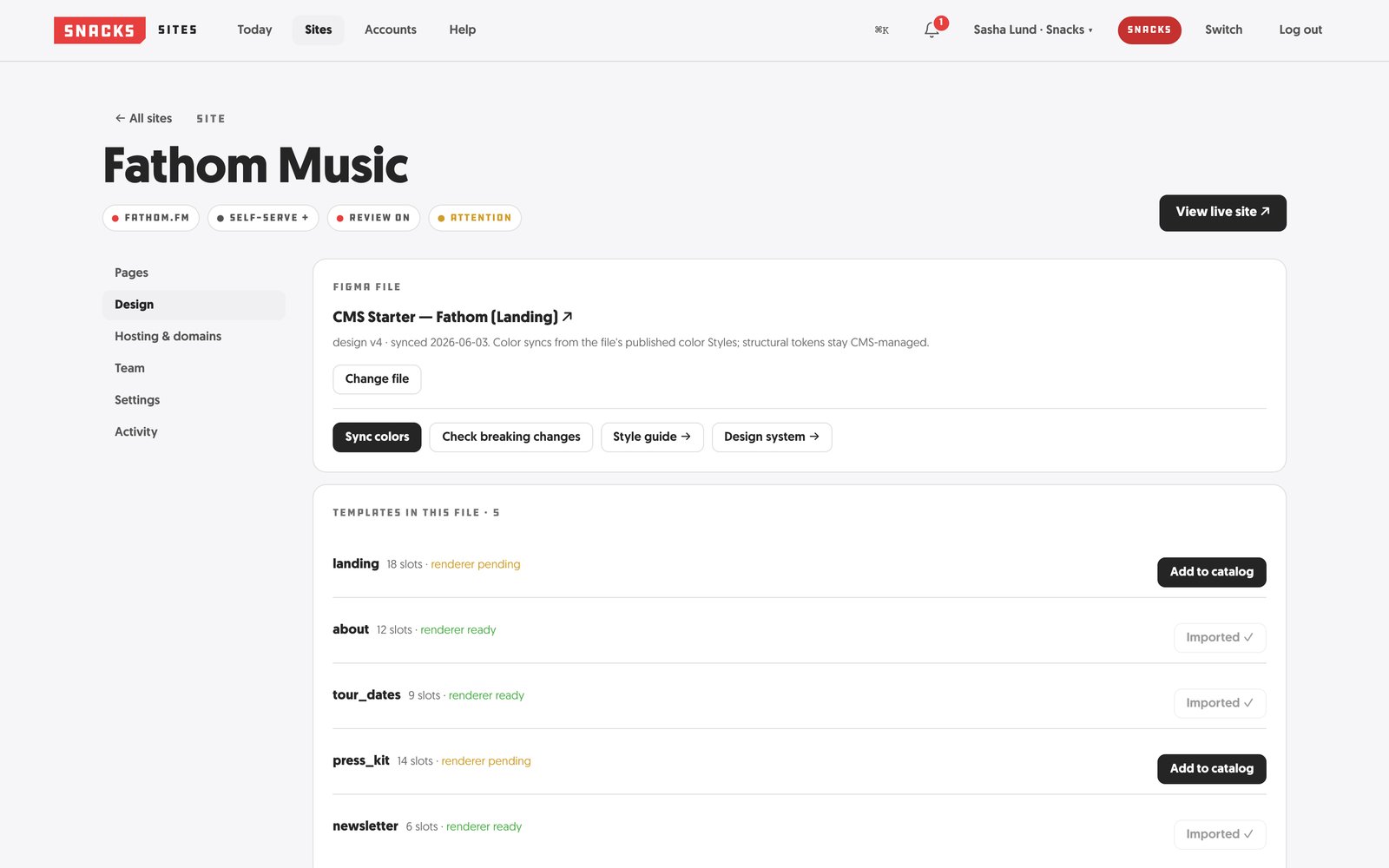
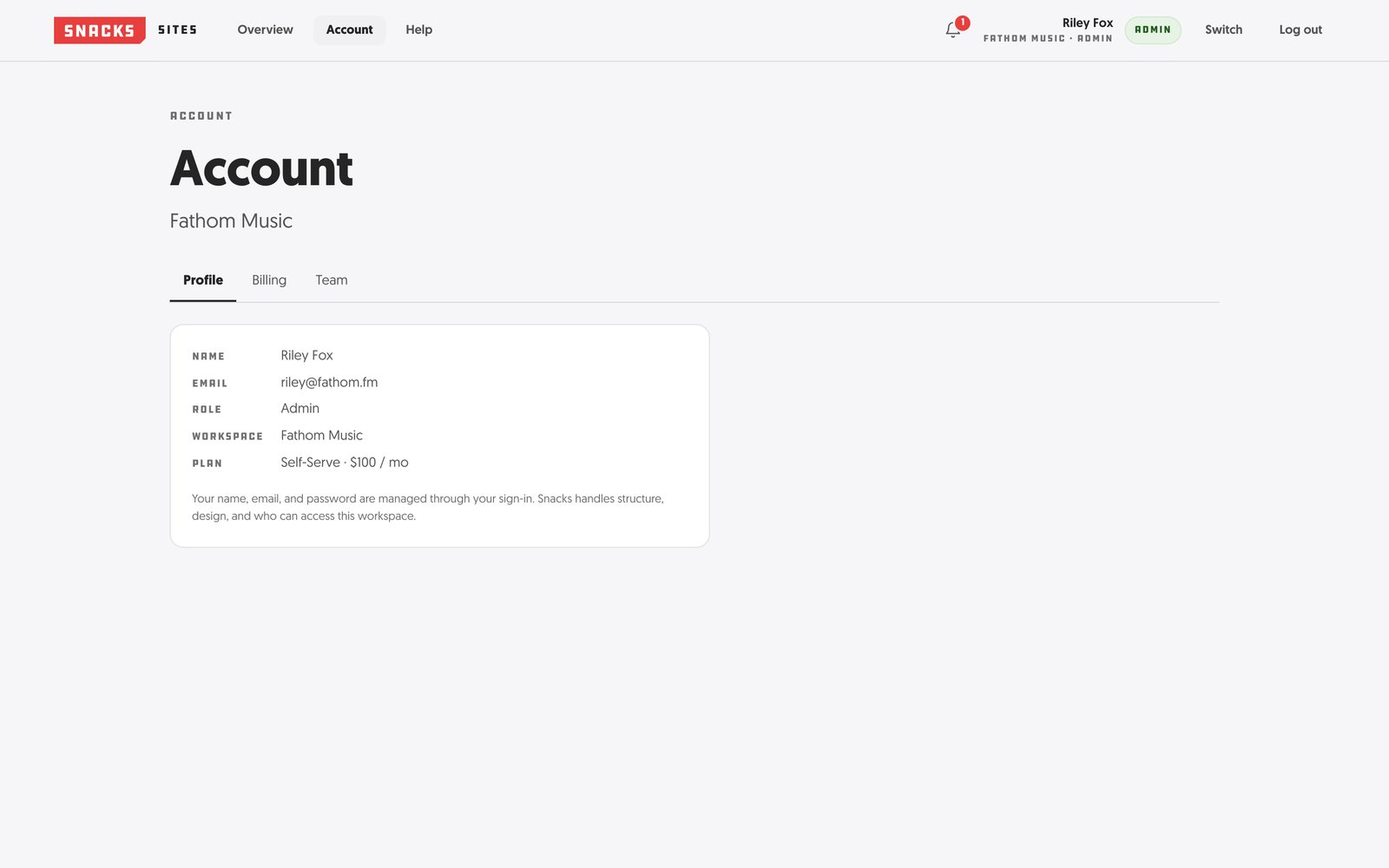
Snacks Sites is the biggest thing to come out of Labs so far: a managed website platform, and the clearest picture of how we work now, because the product is the process.
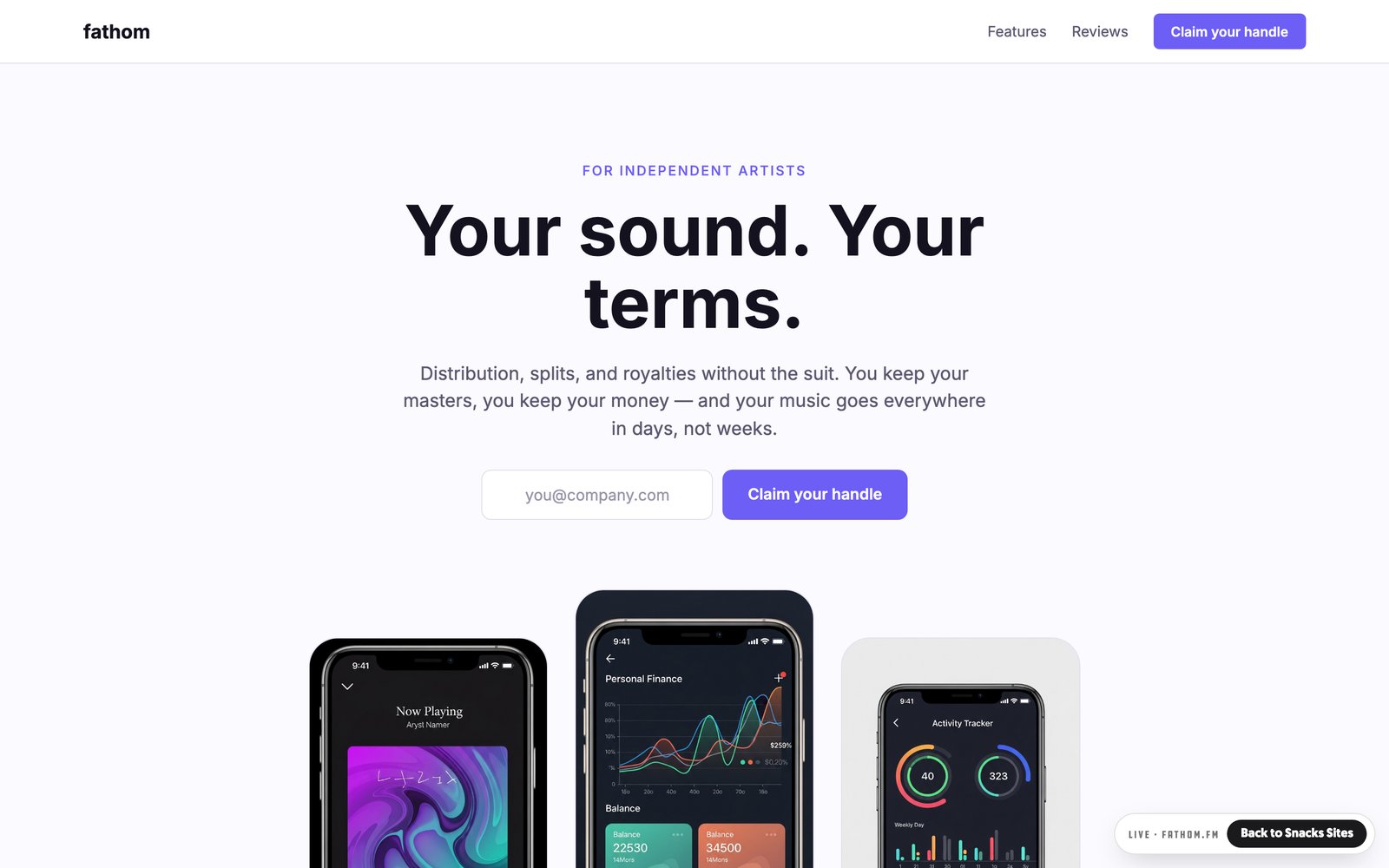
A designer builds page templates in Figma, with full control over every detail. The platform reads those files through a naming convention and turns them into editable, publishable pages. Clients edit text and images inside slots the designer defined. Never the structure. The design intent is protected by the system itself, not by a style guide someone has to remember to enforce.
The template editor at the center of that loop is a tool that didn't exist, so we built it. That's what cheap-to-try means in practice: the question stopped being whether custom tooling is worth the cost and became what the tool should do. We make that same move for client work, building the workflow the project actually needs instead of bending the project around off-the-shelf tools.
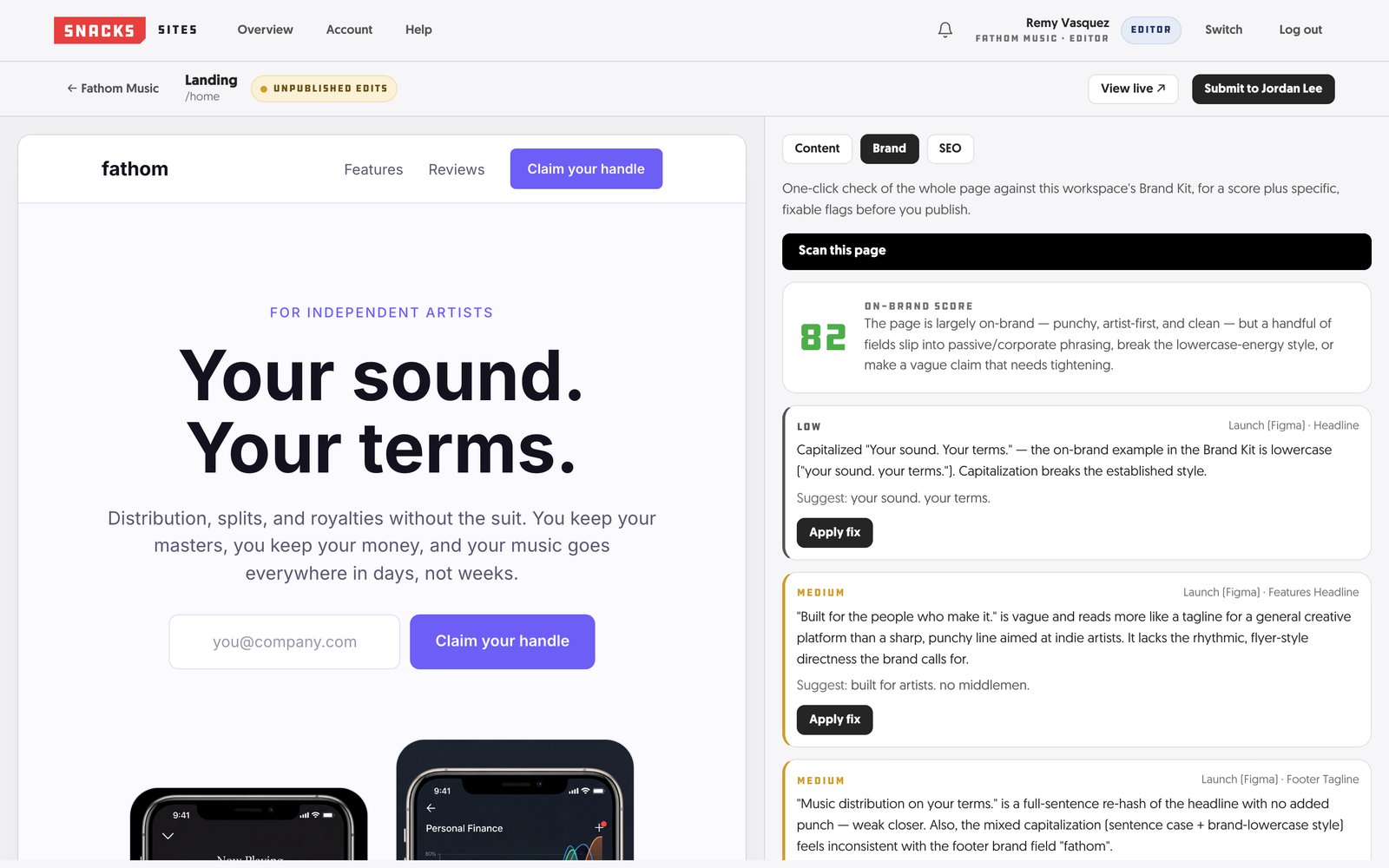
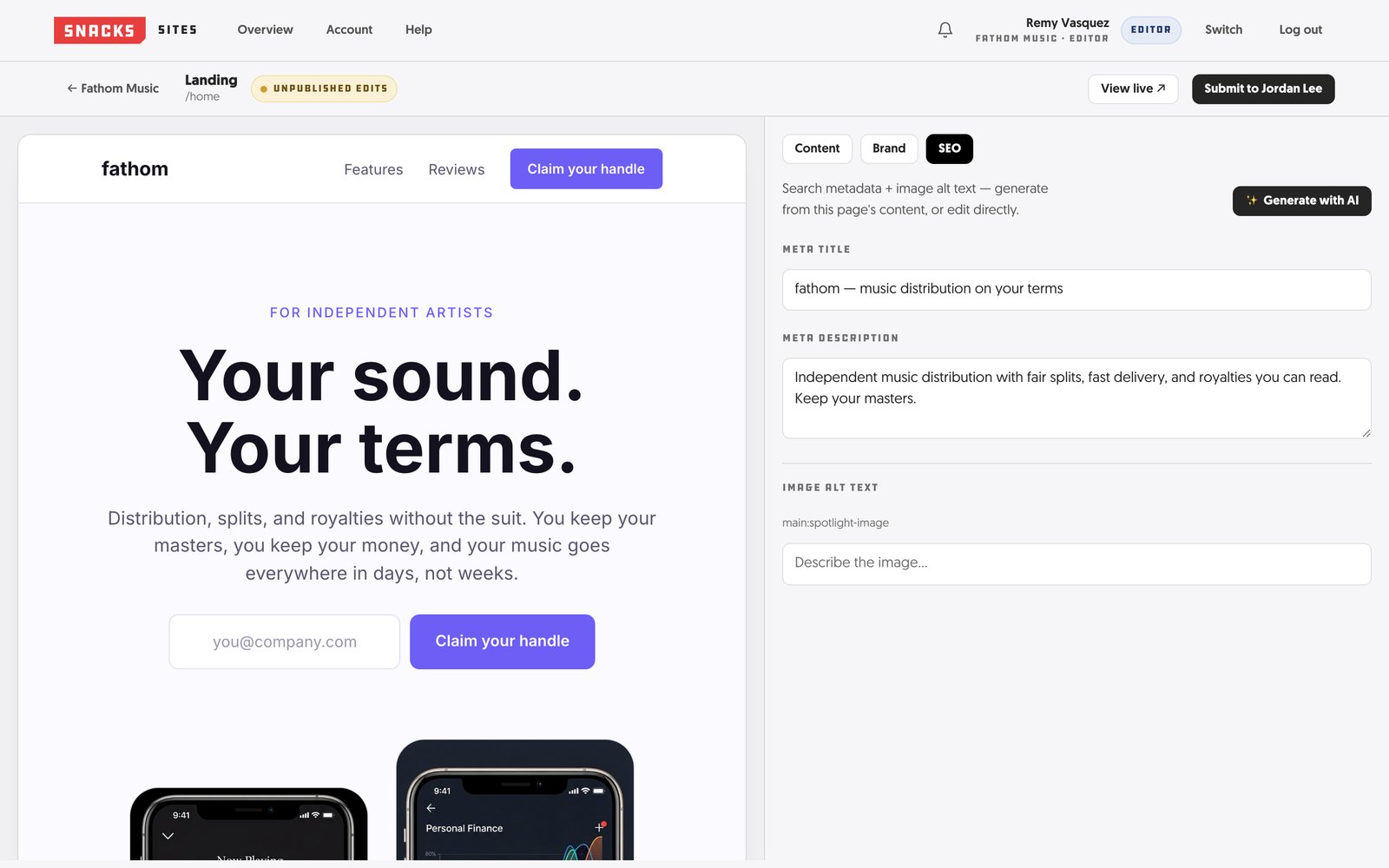
AI runs inside the product too, drafting copy, scanning pages against the brand, generating imagery. It works under the same guardrails as everyone else: anchored to the client's brand kit, checked after it generates, and structurally unable to break the design.
Proven process, for the parts that are about people.
Here's what AI didn't replace: the design disciplines that get a room of stakeholders aligned on a complex product.
When the problem is "what should this product be," we still reach for the proven work: research, structural audits, journey walking, design reviews, workshops. Before we redesigned Snacks Sites' own interface, we ran a full audit and walked the product through every role's eyes, and the findings drove the redesign. AI made that work faster to assemble. It didn't replace the discipline, and it can't sit in the room and build agreement. Client work leans on it hardest: workshops, reviews, and alignment sessions are still how a complex product finds its shape with a partner's stakeholders in the room.
That's the shape of the whole thing, honestly. AI augments the process. It doesn't get to be the process.
One designer took an app from Figma to the App Store.
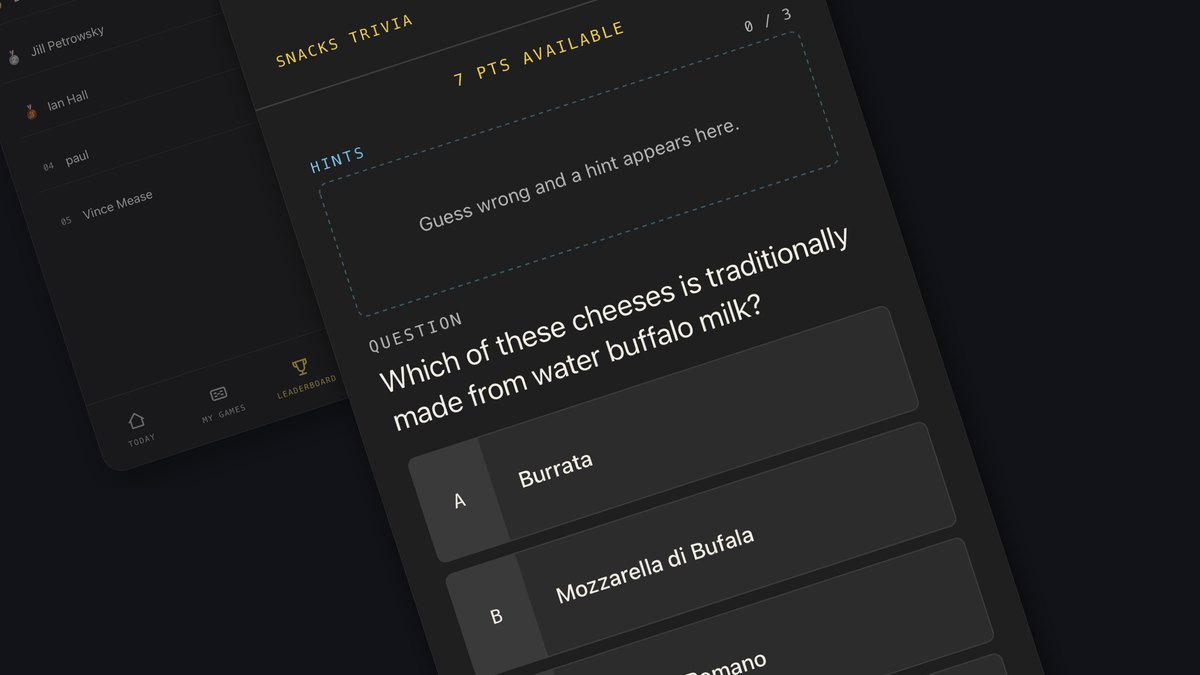
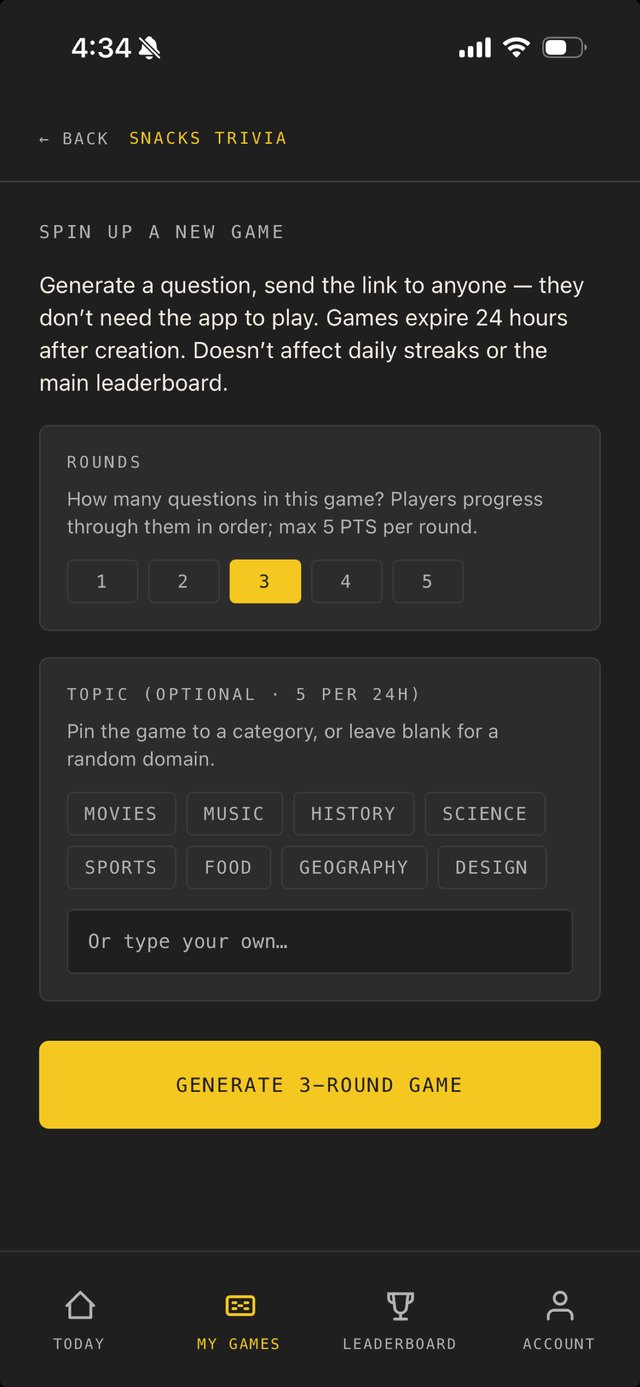
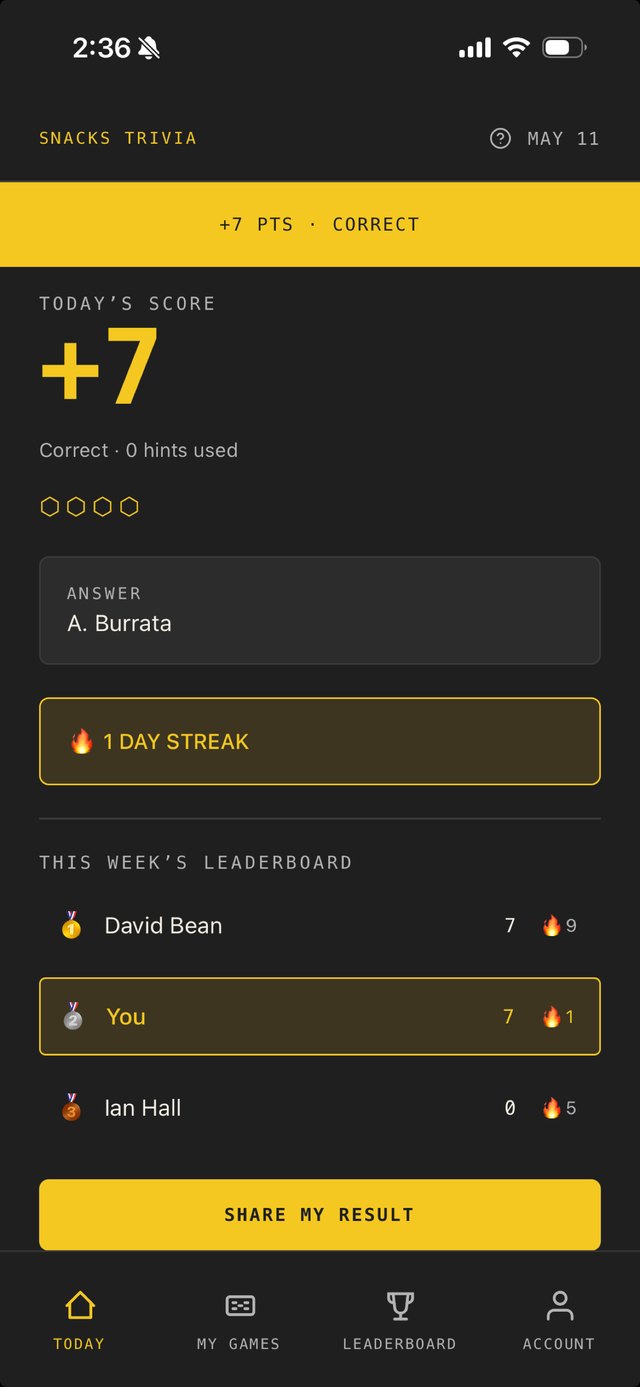
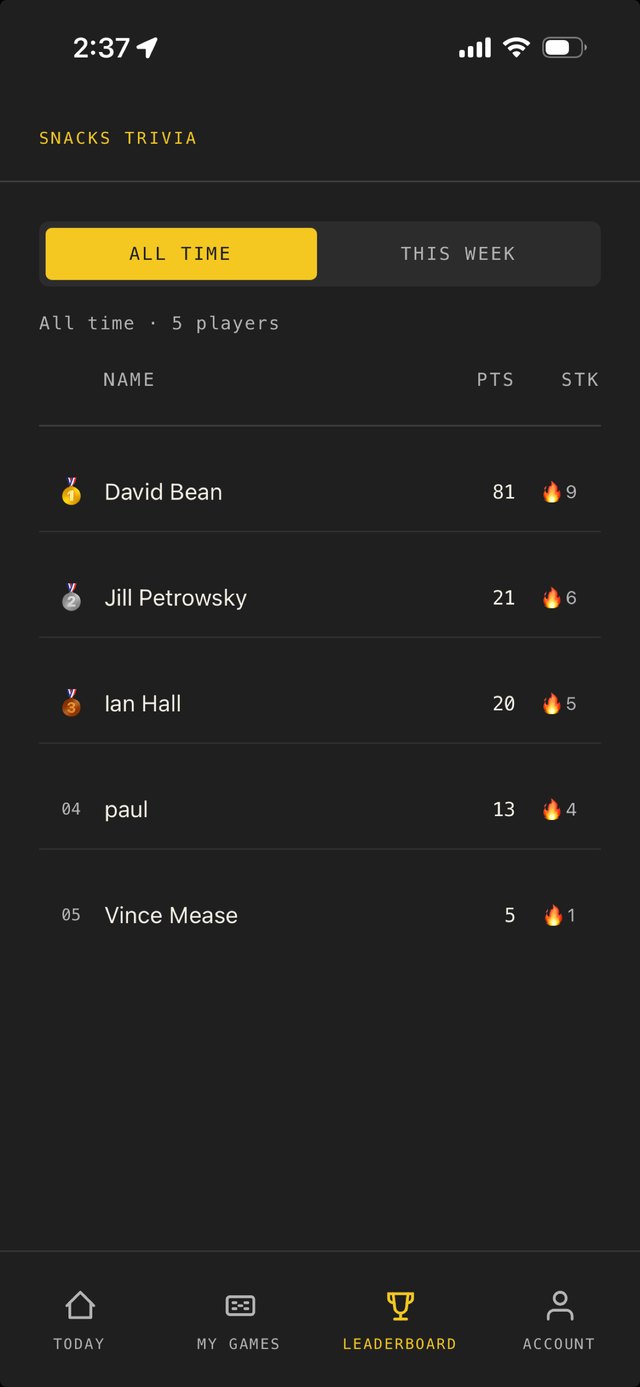
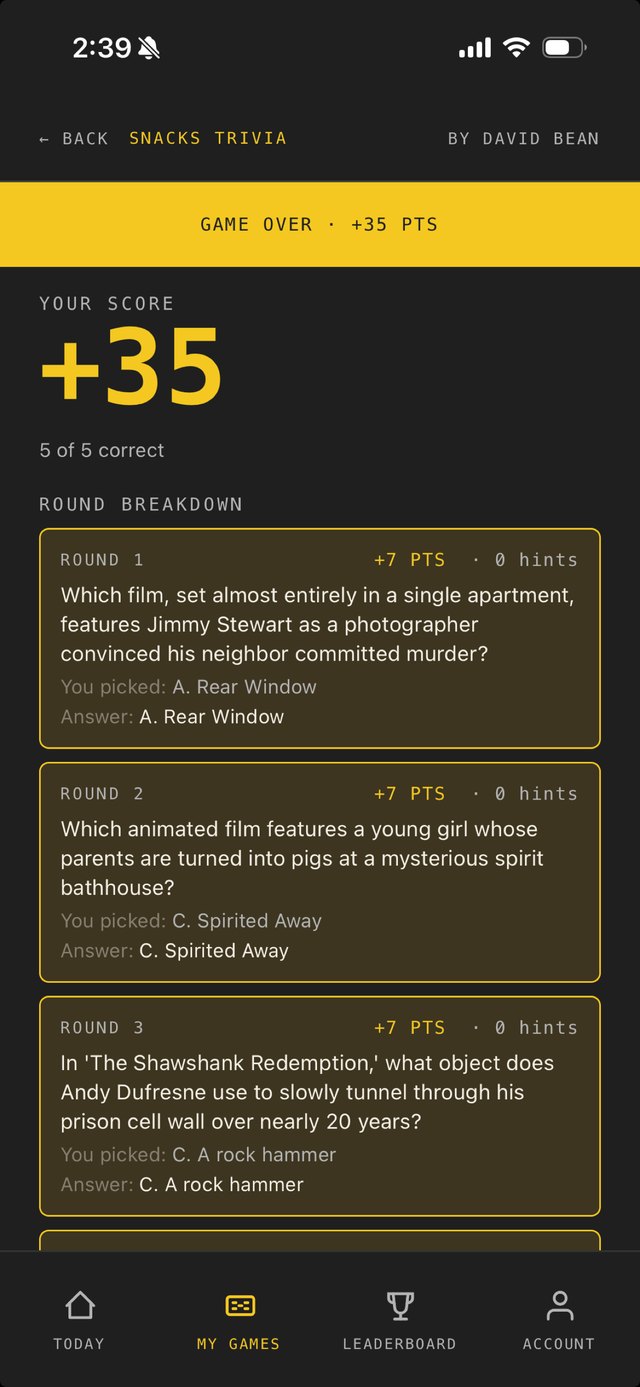
Snacks Trivia is a daily trivia game, live on iOS, Android, and the web on one shared backend. One Snacks designer carried it the whole way: designed it, built it with coding agents, and shipped it to both app stores in seven weeks, about a hundred hours of hands-on time.
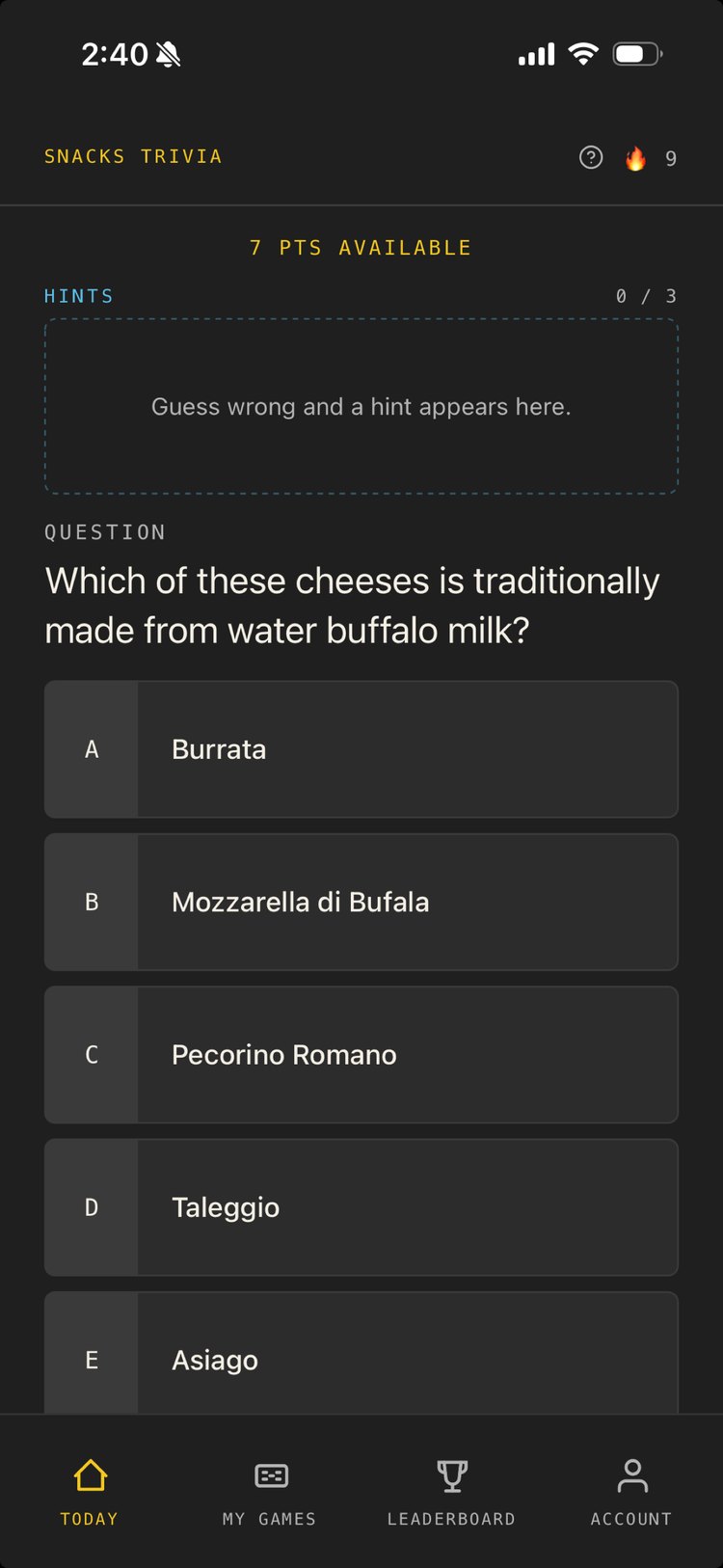
This is what Labs is for, and it isn't one hero designer: the whole studio works this way now, on our own products and on client work. Our designers aren't learning to be engineers. They're learning to ship, with AI as the multiplier and GitHub as the place the work lives. The judgment was always in the room. Now the shipping is too.
Play it yourself: Snacks Trivia is live on the App Store, on Google Play, and on the web. The full build story is in the Snacks Trivia case study.
Then a beloved brand handed us their AI bet.
Everything above started as an experiment on ourselves. Here's what it looks like on a client's stage. A beloved national spirits brand wanted every sales rep to have a personal mixologist powered by generative AI, with zero room for off-brand output, built for a team that had never written a prompt in their lives.
The Labs habits carried straight over. Brand guardrails on everything the model generates, the same philosophy as the slots in Snacks Sites. A human in the loop who can regenerate or hand-edit any element, because trust is earned in stages there too. And the proven work wrapped around all of it: user testing across four sales personas, live training for about 250 reps, and a six-month adoption plan. Designed by Snacks, engineered with a partner team we've shipped with before.
The product launched in under a year and is in the field today. We can share the full story in person.
The honest scorecard.
We measure it. Weeks to ship, hours in the build, real usage after launch. Velocity claims are cheap and everyone makes them, so we hold ourselves to numbers we can show.
Judgment moved, it didn't shrink. Less time producing, more time deciding. Senior review is now the bottleneck, which is where the bottleneck belongs.
Writing things down became the highest-leverage skill. Specs, conventions, decision logs. AI amplifies whatever clarity you give it, and amplifies the ambiguity too.
We throw more work away, and the work is better for it. When a rebuild costs days instead of weeks, feedback gets acted on instead of filed.
Guardrails beat guidelines. The constraints that hold are built into the system, not written in a PDF. True for clients, true for AI.
Trust is earned in stages. Everything autonomous we run started read-only and graduated as we verified its judgment. We'd give anyone the same advice: start where mistakes are cheap, verify, then widen the leash.
Questions we'd expect you to ask.
Is our work being fed into AI models?
No. Client work lives in private repositories, and we use AI tools under terms that keep your data out of model training. Your materials aren't used to train anything, ours or anyone else's.
Who actually writes the code?
AI drafts most of it. A person reviews every change before it ships, and automated checks run before the person does. Nothing merges on the machine's say-so.
Who owns what's produced?
You do, same as always. The deliverable is a repository you can own outright, and AI involvement doesn't change how we handle IP.
Does this make projects cheaper or just faster?
Mostly it changes where the effort goes. Production hours shrink, and the time shifts to judgment: deciding, reviewing, testing with real people. The practical difference you'll feel is more iterations and working software earlier in the engagement.
What happens when the AI gets it wrong?
It does, regularly. That's priced into the process. Review catches it the way review has always caught mistakes, and anything autonomous starts read-only and earns trust before it can act.
Are your designers replacing engineers?
No. They've learned to ship, which changes what a small team can carry, but complex systems still call for engineering partners. We work in their world now (GitHub, pull requests, previews), which makes that collaboration easier, not rarer.
Is our project one of your experiments?
No. Labs experiments happen on our own products first. Trivia and Sites. What reaches client work is the part that's already survived us using it. The AI mixologist we designed for a national spirits brand is what that looks like in practice.
What tools are you actually using?
Figma for design. Claude and coding agents for the build. GitHub for everything in flight, and automated pipelines for testing and deploys. The stack is deliberately boring so the work can be interesting.
Next update: September 2026, what left the lab since August. All updates live at Snacks Labs.