

We gave ourselves the brief.
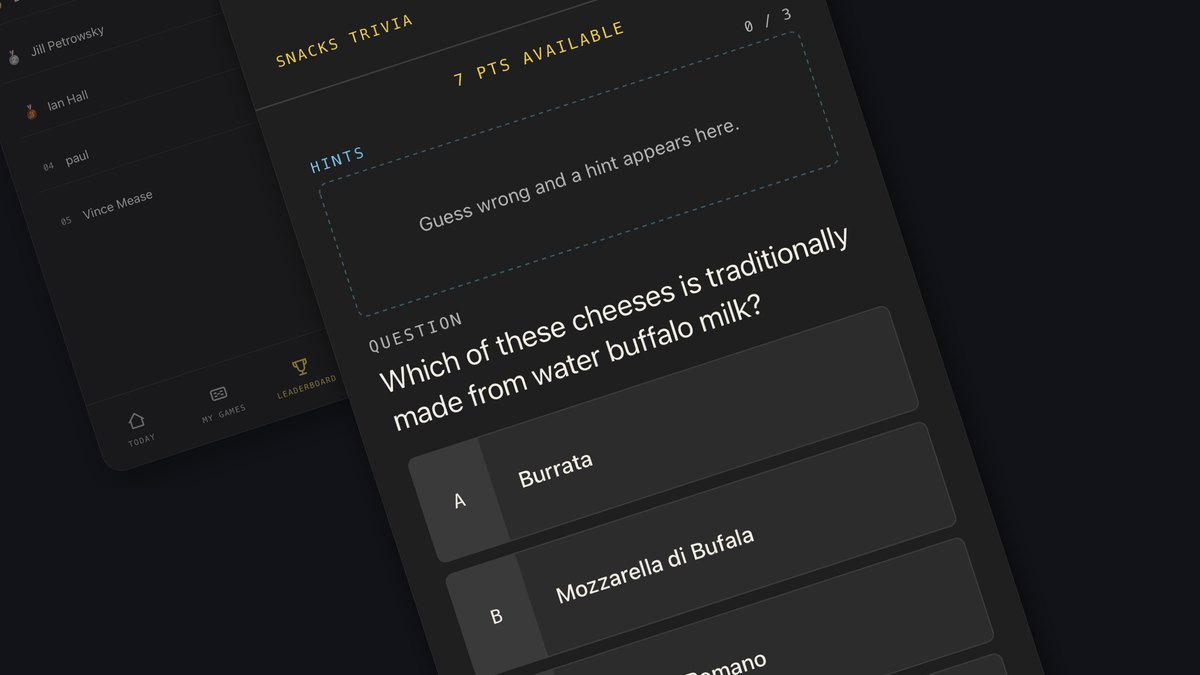
Snacks builds software for other people. This time the client was us. We wanted something real out in the world. Not a prototype or a pitch deck, but a shipped product with real accounts, a real backend, push notifications, and the polish we'd give any client. So we made a daily trivia game and put it on the App Store, Google Play, and the web.
The fun part was the constraints. A small team, a timeline measured in weeks, not quarters, cross-platform from day one, and unmistakably Snacks.
It was also a test of how we build now: roles that blur on purpose, a spec to keep everyone honest, and real player feedback steering what we made.
How do you ship three platforms in seven weeks?
Not with heroics. With a workflow. Everything the app should be lived in a set of living spec documents: the product rules, the database contracts, the design tokens, and a running decision log. Those docs were the single source of truth. Every working session began by reading them, and every non-obvious choice got written down, with its reasoning, the moment it was made.
-
One designer, both hats
A Snacks designer designed the game and engineered it, from the Figma file to the App Store. AI in the loop made the engineering half realistic. The product sense was already in the room.
-
Product, shared
No dedicated PM. What to build got decided together, across a team whose backgrounds don't all look the same, so the game got more than one kind of instinct.
-
Web first, then native
We iterated fast on a Next.js web build, locked the behavior, then ported the proven flows to a React Native app for the App Store and Play Store. One backend served both.
-
Feedback over hunches
From day one we put the game in front of our own people: friends, family, the wider network. And we still do. Their reactions drive what changes next. AI builds the changes, it doesn't get to choose them.
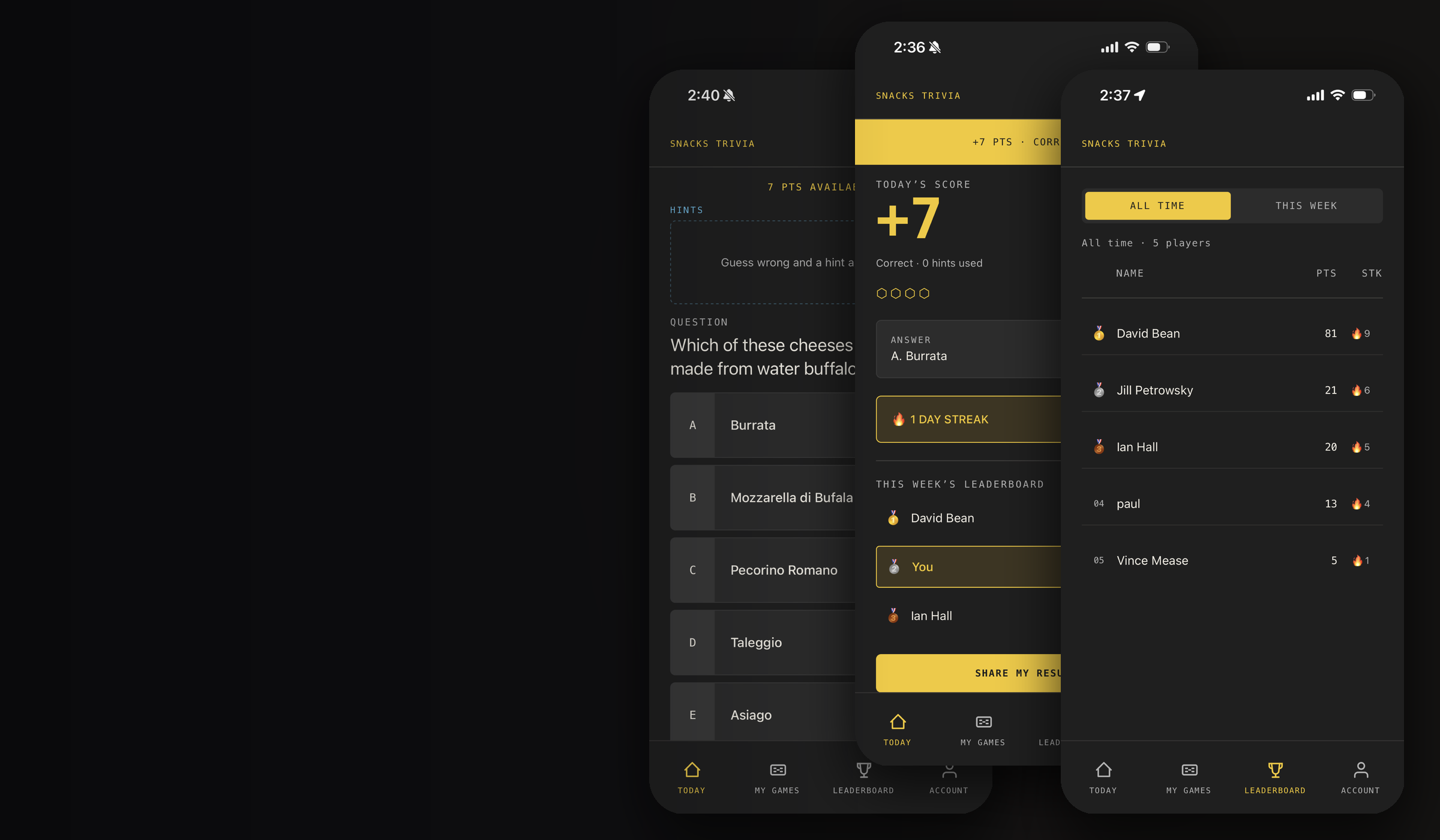
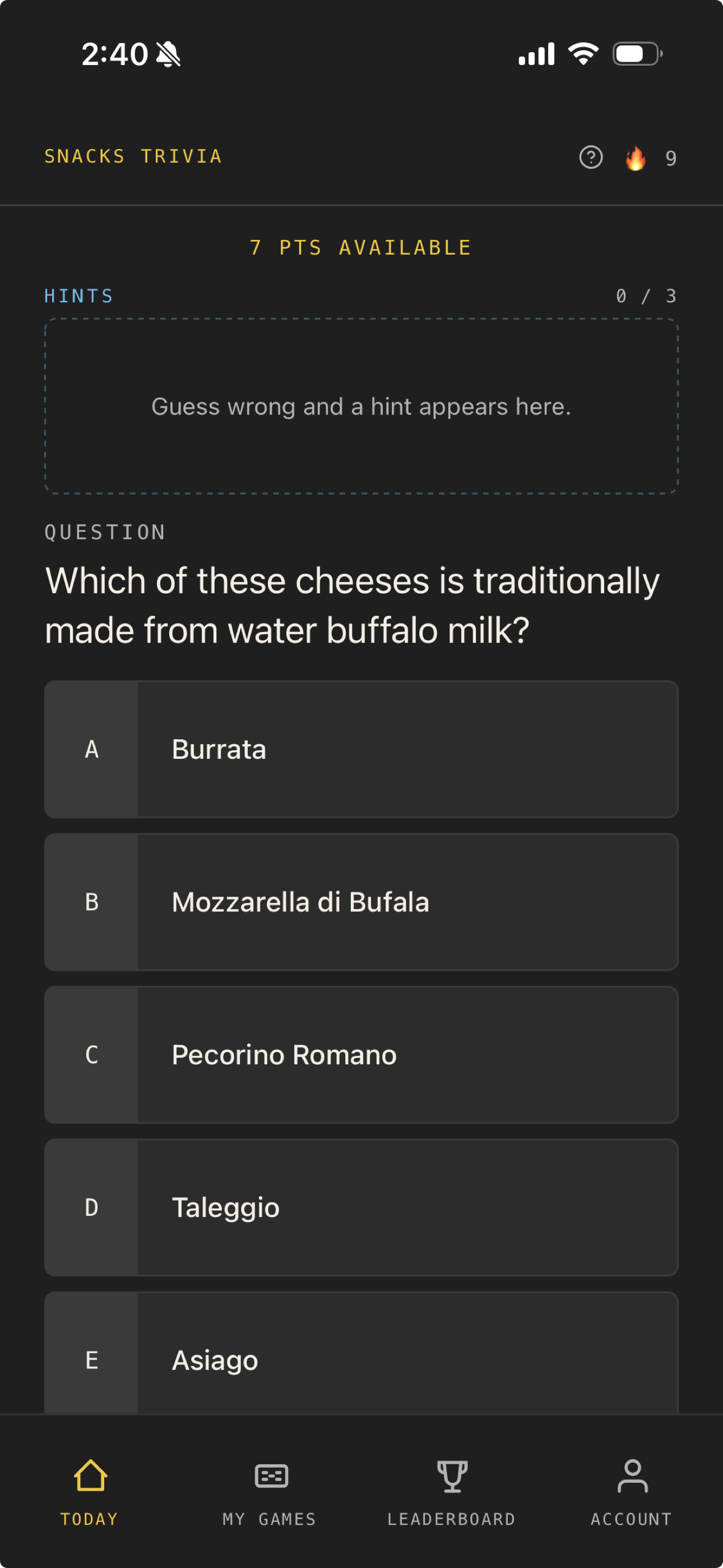
The game got good by subtraction, and every cut came from watching real people play, friends and family we'd handed it to. It started as a live, race-the-clock game, until we watched people fail to coordinate a thirty-second window, so we switched to an async, play-anytime daily puzzle, Wordle-style, with hints that build tension on every wrong guess. A clever auto-elimination mechanic tested as confusing, so it went. Design-only questions got repetitive, so we opened the topics to anything.
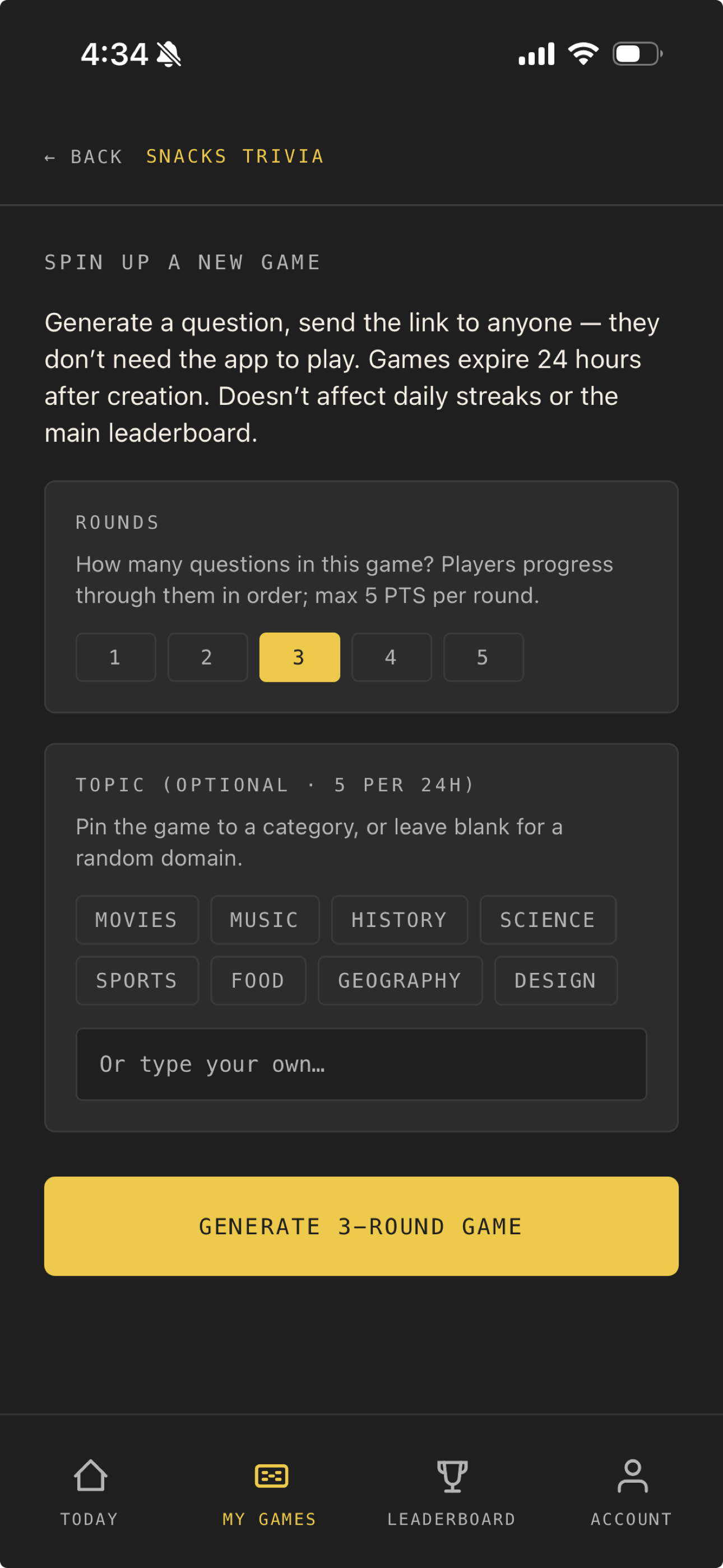
Then came the social layer: shareable one-off games anyone can generate in a tap and send to a friend, playable right in a browser with no account at all, or in the app.
A daily game, live on every platform.
Snacks Trivia shipped: a daily puzzle and a shareable-games platform, live on the App Store, Google Play, and the web, all on one backend. Real accounts, push notifications, anonymous play, server-side question generation, content moderation, leaderboards, and streaks. The unglamorous production plumbing, not a demo reel.
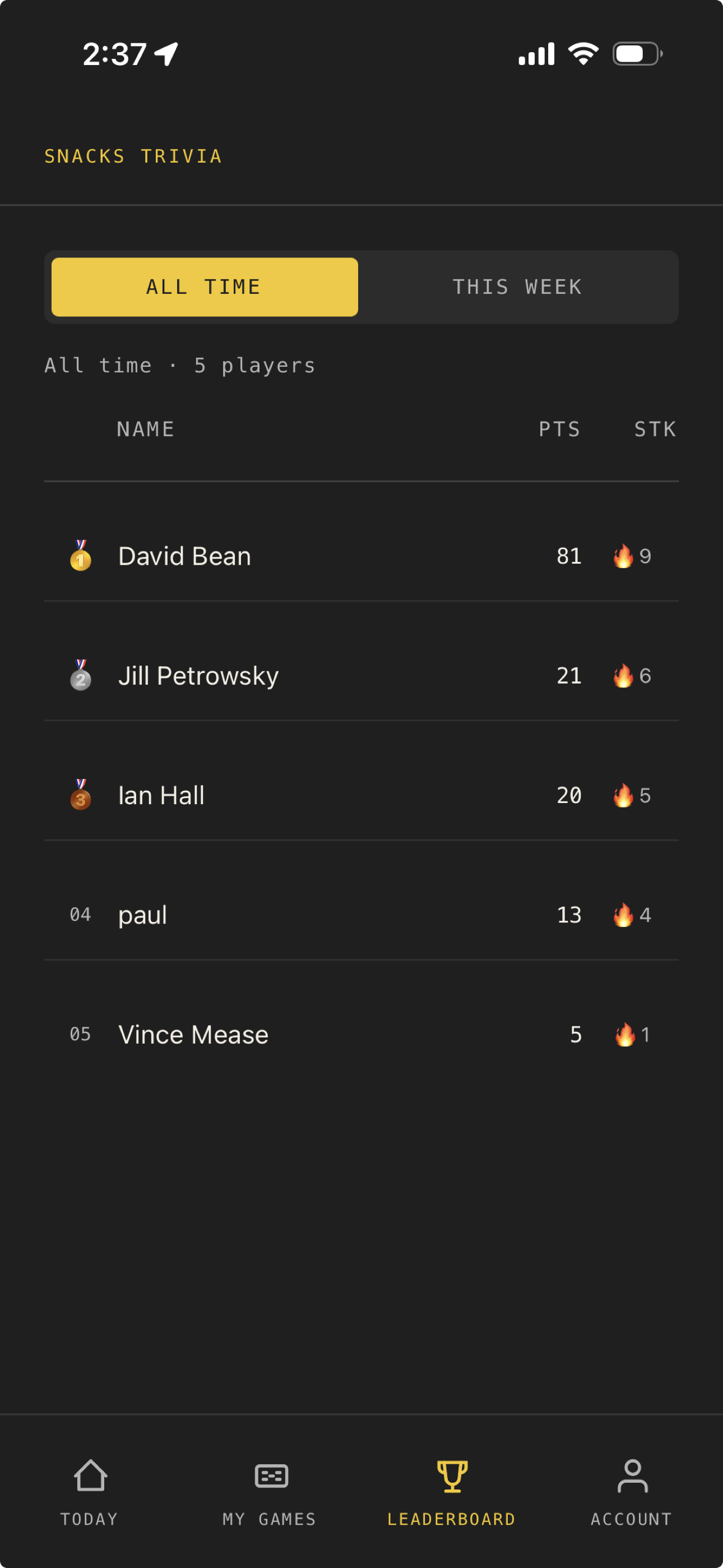
The numbers tell the efficiency story: roughly seven weeks from first commit to public launch, about 100 hours of hands-on build time, 332 commits, and three platforms from a single shared backend.
But the real result is what it proves. We can take an idea to production in weeks, at a cost that used to be out of reach for a studio our size, without giving up the craft that makes software worth using. And the game’s still changing as feedback rolls in. That’s how we build everything now.
Snacks Trivia is live now, on the App Store and Google Play.
Weeks 1–2 · Foundation
The first playable daily game on the web.
Weeks 2–3 · The pivot
Live, synced play gave way to an async daily puzzle with progressive hints and scoring.
Weeks 3–4 · Shareable games
One-off games on any topic, plus no-account anonymous play.
Week 4 · Hardening
Migrations moved into version control; error tracking and a security pass landed.
Weeks 4–6 · Native
The Expo / React Native iOS + Android app, built and submitted to the stores.
Weeks 6–7 · Polish
Win moments, a typographic pass, and a calmer, no-pressure answer flow.
We pointed the studio at our own idea. Seven weeks later, it was on the App Store.Snacks